Longevity and VO₂ max
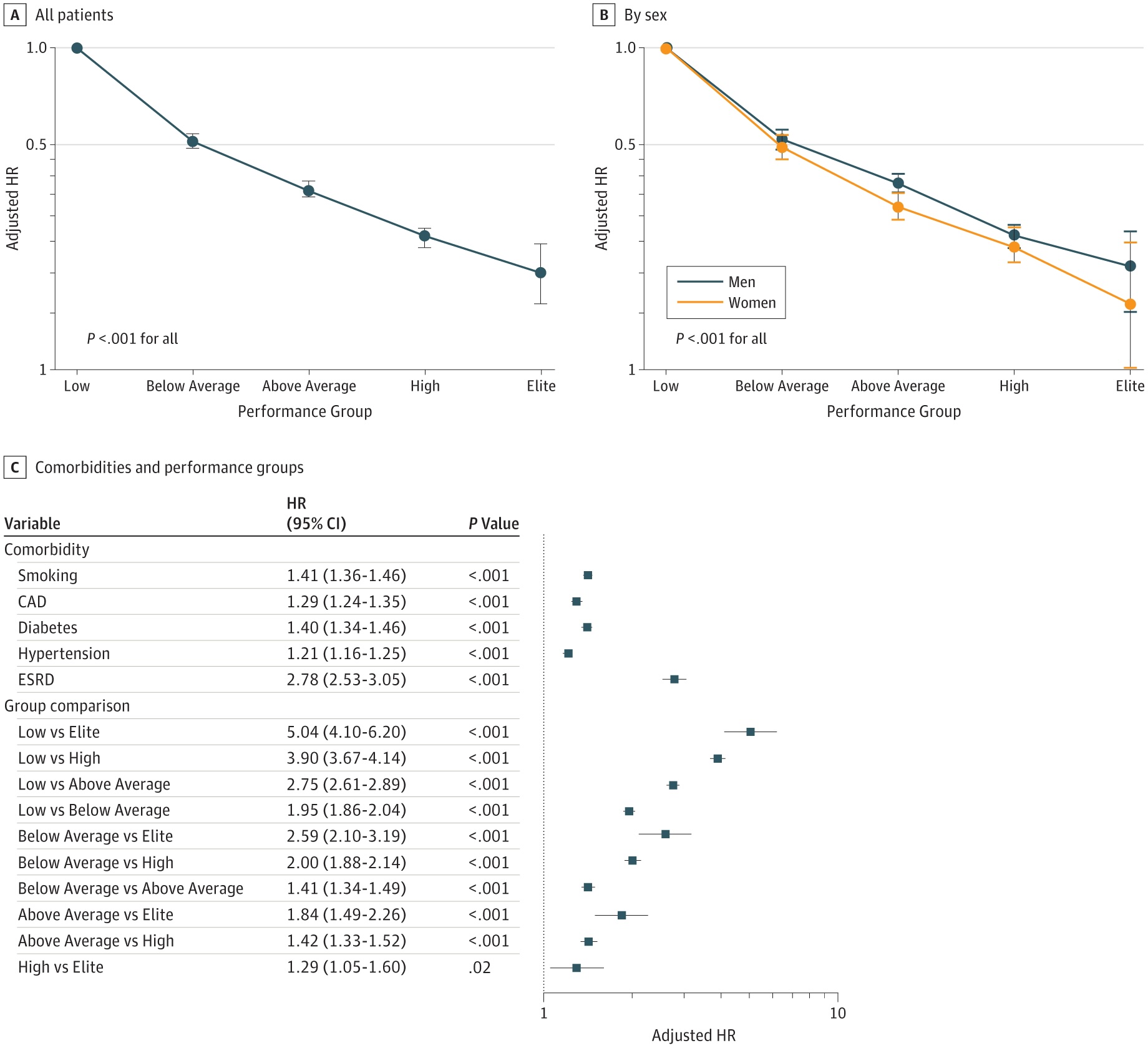
VO₂ max, a measure of aerobic fitness, is one of the strongest known predictors of long-run mortality: in Mandsager et al. (2018), the mortality gradient across fitness levels is steeper than the one associated with end-stage kidney disease. This page converts my watch's VO₂ max estimates into an implied life expectancy. The exercise is deliberately back-of-the-envelope; the methodology is below.
Methodology
Garmin estimates VO₂ max (mL/kg/min) from heart-rate measurements during exercise and recovery. Wrist-based heart rate is noisy, but these estimates have been validated against laboratory tests. I smooth the raw estimates with a rolling average.
Each VO₂ max level maps to a mortality hazard ratio relative to the median individual, using the gradient in Mandsager et al. (2018). I fit a natural cubic spline through their estimates so that any VO₂ max value yields a hazard ratio.
Baseline survival curves by age and sex come from CDC mortality data (2018–2021, so the pandemic years push them down a bit). Applying the hazard ratio under a proportional-hazards assumption shifts the survival curve, and integrating the shifted curve gives period life expectancy. A higher VO₂ max means a hazard ratio below one, more area under the survival curve, and a longer implied life. Code and data are in the GitHub repository.